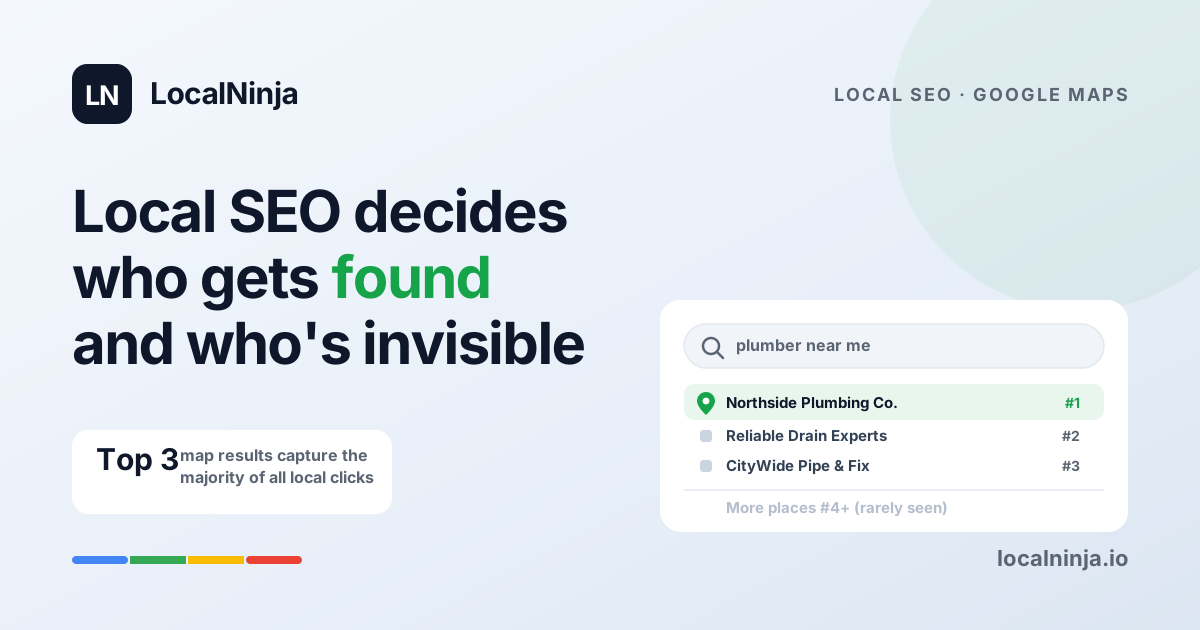
Most local business owners hear “SEO” and picture something for big companies, online shops or marketing agencies. For a local business it is simpler and more immediate than that. Local SEO is the set of things that decide whether a customer two streets away finds you or your competitor when they search “[your service] near me”. It is the most important marketing channel most local businesses leave half-finished, and it is mostly free.
What “local SEO” actually means
Local SEO is everything that influences how Google ranks businesses in two places: the map results (the three businesses with pins at the top of a local search) and “near me” searches generally. Google ranks those on a different basis from ordinary web results. Where regular SEO is about your website — its content, the links to it, its authority — local SEO is weighted toward your Google Business Profile: how complete it is, how close you are to the searcher, your reviews, your photos, whether your details match across the web, and how recently anything happened on the listing. You can do well at it without ever writing a blog post.
Local SEO vs regular SEO, side by side
- Where you show up: regular SEO targets the list of web links; local SEO targets the map and the three listings above the links.
- What gets ranked: regular SEO ranks a web page; local SEO ranks a business listing (your Google Business Profile), whether or not you have a website.
- What moves it: regular SEO is driven by content and links; local SEO is driven by category, completeness, distance, reviews, photos and consistent details.
- How fast it moves: website changes can take months to register; profile changes usually show within days.
- Who wins: regular SEO rewards the biggest site; local SEO rewards the best-tended listing nearby, which is why a two-person shop can sit above a national chain.
Why it matters more than your website
For most local searches, Google answers the question on the results page. The customer sees the map, the photos, the rating, the hours and the phone number, and they call or drive over. Your website matters to the people who want more detail, but the decision is often made before anyone clicks. That is why a business with a handsome website and a half-finished Google profile loses customers to a competitor with a plain website and a complete profile.
The cost of not showing up
Open Google on your phone and search for your trade in your town. Three businesses get a pin, a photo and a rating. Everything else sits behind a “More places” link that most people never tap. If you are not in those three for the searches that matter to you, the customer who hired someone else this morning never knew you existed, and you never knew you lost them. The loss is invisible, which is why it is easy to ignore for years.
What a “near me” search actually looks at
Google describes its local ranking in three words: relevance, distance and prominence. Relevance is how well your listing matches what was typed — your category, your services, your description. Distance is how far you are from the person searching, which you cannot change, but which is why rank differs block by block. Prominence is how well known and well regarded you are — your reviews, your photos, how often your name and details appear consistently across the web. Everything in local SEO is a way of improving relevance or prominence, because distance is fixed.
What moves it, in order
- A complete, accurate Google Business Profile with the right primary category
- Reviews — a steady flow, with recent ones, that mention the actual service
- Owner replies to reviews, which signal a tended, trusted business
- Photos and posts added regularly, so the listing looks open and active
- Consistent name, address and phone across your website and every directory
- A simple, fast website with the same details and a clear service area
Notice what is not on this list: keyword tricks, link-building, a blog, paid tools. Local SEO is overwhelmingly about doing the basics fully and consistently, which is exactly why most businesses skip them.
How long local SEO takes to work
Faster than regular SEO. Most profile changes are picked up within days, not months. Owners who fix the category, fill in services, add photos and reply to reviews usually see movement in the following weeks, with the larger gains over two or three months as reviews and regular posting build up. The businesses already doing this pull further ahead each month you wait.
Where to start this week
- Open your profile and set the primary category to the exact thing you want to be found for. Add the secondary categories that truly apply.
- Fill in services, hours and a plain-sentence description, and check that the name, address and phone match your website exactly.
- Ask three happy customers for a review that says what you did for them, and reply to every review already there.
How to know whether it is working
Your profile’s Performance tab shows how many people found you, called you and asked for directions each month — watch those three numbers. For the fuller picture, a local SEO audit shows where you rank across your whole area rather than from your own doorstep, which businesses sit above you and why, and whether ChatGPT and Gemini name you when people ask. LocalNinja’s profile audit does that in one report and hands you the three things to fix first.