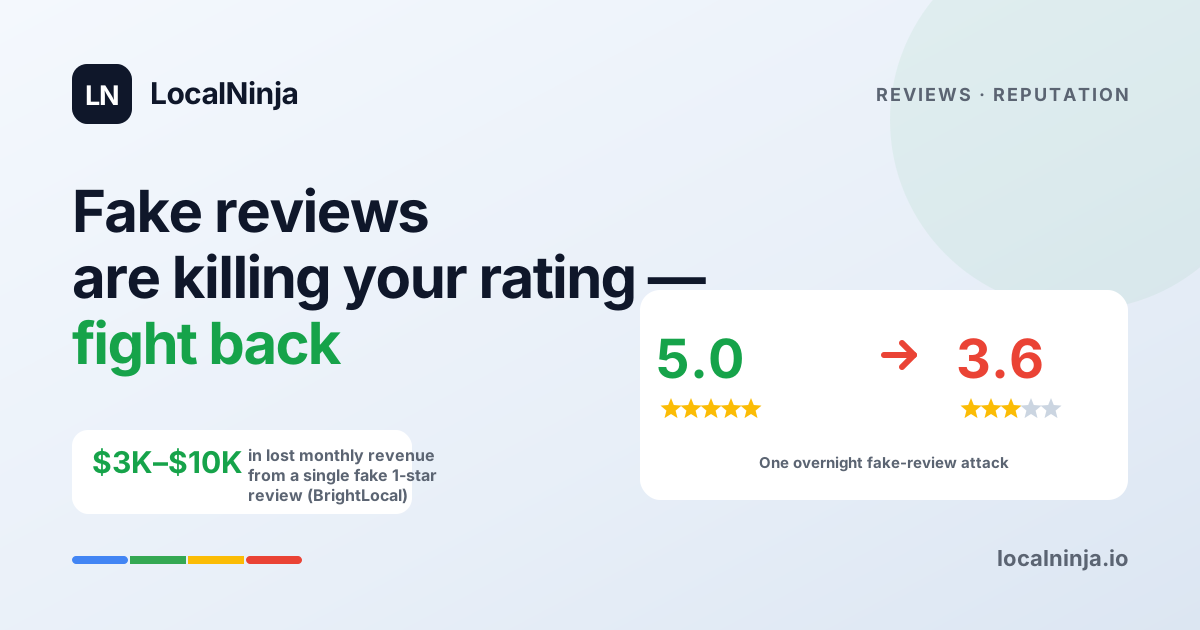
Last year, a contractor in Los Angeles woke up to 14 new one-star reviews on his Google profile. His rating dropped from 5.0 to 3.6 overnight. A few hours later, he got a WhatsApp message from an unknown number: pay $500 and the reviews disappear. He'd been hit by a review extortion scam — and he's far from the only one.
Fake reviews are one of the most damaging things that can happen to a small business online. According to BrightLocal's 2025 research, a single fake one-star review can cost a local business between $3,000 and $10,000 per month in lost revenue. When your rating drops below 4.0 stars, most customers scroll right past you and click on your competitor instead.
The scam that's hitting small businesses right now
Review extortion used to be rare, but it's become a real industry. Here's how it typically works: an attacker identifies businesses with high ratings and strong review counts — the ones with the most to lose. They create a batch of fake Google accounts and post a flood of one-star reviews within a few hours. The reviews are vague enough to not violate Google's policies on their face ("Terrible experience, would never go back"), making them harder to get removed.
Then comes the shakedown. The attacker reaches out — usually through WhatsApp, Telegram, or a burner email — and offers to remove the reviews for a fee, typically $300 to $2,000. Some businesses pay because they feel they have no other option. But paying doesn't guarantee removal, and it marks you as a target for future attacks. It's a lose-lose situation.
It's not just scammers — competitors do it too
Not every fake review comes from an extortion ring. Sometimes it's a competitor (or someone they hired) trying to drag your rating down. Sometimes it's a former employee with a grudge. Sometimes it's a case of mistaken identity — someone meant to review the restaurant next door but hit your listing instead. The motivation doesn't matter much to you; the damage to your rating is the same.
There are also "positive review" scams to watch out for. Companies approach businesses offering to sell them five-star reviews. This might sound tempting when you're staring at a 3.8 rating, but buying fake reviews violates both Google's terms of service and federal law. The FTC's Consumer Review Rule, finalized in October 2024, explicitly prohibits creating, buying, or selling fake reviews — whether written by humans or generated by AI. The FTC handed out $4.2 million in fines during 2024 and 2025 alone.
How to spot a fake review
Fake reviews usually have telltale signs if you know what to look for. No single sign proves a review is fake, but when you see three or four of them together, you're almost certainly looking at a manufactured review.
- The reviewer has no profile photo and a generic name like "John S." or "Business User."
- The review text is vague and could apply to any business — "Bad service, don't recommend" with no specific details about what happened.
- The reviewer's profile shows they've reviewed several of your direct competitors, often with five stars.
- The review mentions a service you don't even offer. A one-star review complaining about your "dine-in experience" when you're a plumbing company is a dead giveaway.
- Multiple negative reviews appear within hours of each other, all with similar language patterns.
- The reviewer's other reviews are all in different cities hundreds of miles apart — nobody's genuinely visiting dentists in both Portland and Tampa in the same week.
How to report fake reviews to Google
Google's Gemini AI system now blocks over 85% of fake reviews before they ever appear on your listing. But some still get through, and when they do, you need to report them. Here's the process that actually works, because just hitting the "flag as inappropriate" button usually isn't enough on its own.
- Take screenshots of every suspicious review, including the reviewer's profile and their other reviews. You'll need this documentation later.
- Flag each fake review through your Google Business Profile dashboard. Go to Reviews, find the review, click the three dots, and select "Report review." Choose the most specific reason that applies.
- If the reviews are part of an extortion attempt, save all messages from the attacker — screenshots, phone numbers, email addresses, everything.
- Contact Google Business Profile support directly through the "Contact Us" option in the Help Center. Explain the pattern — that you received multiple fake reviews in a short timeframe — and attach your documentation.
- If you're dealing with an extortion attempt, also file a report with the FTC at reportfraud.ftc.gov and your local police department. This creates a paper trail that strengthens your case with Google.
What to do if Google won't remove them
Sometimes Google's team reviews your report and decides the fake reviews don't violate their policies. This is incredibly frustrating, but it's not the end of the road. You can escalate through the Google Business Profile Community forum, where volunteer Product Experts can flag your case for a second look. Be specific and polite — these are real people volunteering their time.
You can also try the "suggest an edit" pathway on Google Maps. Navigate to your listing as a regular user, click "Suggest an edit," and report the specific reviews. This goes through a different review queue than the dashboard flagging tool, and sometimes it gets results when the other path doesn't. If you're dealing with a clear extortion pattern, mention the FTC report number — that tends to get attention.
The best defense: bury them with real reviews
Even while you're fighting to get fake reviews removed, the most powerful thing you can do is generate a steady stream of genuine reviews from real customers. If you have 200 five-star reviews and someone drops 10 fake one-star reviews, your rating barely moves. If you have 15 reviews total, those same 10 fakes are devastating.
The businesses with the strongest review profiles don't get them by accident. They ask. After every job, send a follow-up text or email with a direct link to your Google review page. Make it dead simple — one tap, leave a review, done. Most happy customers are willing to leave a review; they just forget unless you remind them. A good target is asking every single satisfied customer, every single time, and knowing that about 10-20% of them will follow through.
How to respond to fake reviews (without making things worse)
While a fake review is still live on your profile, other customers can see it — and they're watching how you respond. Don't ignore fake reviews, but don't get into a fight either. A calm, professional response actually works in your favor because it shows potential customers that you take feedback seriously.
Something like: "We take every review seriously, but we have no record of this experience at our business. We've reported this review to Google for investigation. If you are a real customer, please contact us directly at [phone number] so we can make it right." This response tells future customers you're paying attention, it signals to Google that the review may be fraudulent, and it gives you the moral high ground. Keep it short, keep it kind, and move on.
The new rules: what the FTC crackdown means for you
The FTC's Consumer Review Rule isn't just about punishing the people who create fake reviews. It also protects you. Under the 2024 rule, it's illegal for anyone — competitors, disgruntled ex-employees, extortion rings — to post fake reviews about your business. If you can identify who's behind a fake review campaign, you may have legal recourse beyond just reporting to Google.
Google's own review guidelines got a significant update in 2026, tightening enforcement around review manipulation. They're now more aggressive about removing reviews that are part of coordinated campaigns, and they're better at detecting AI-generated review text. The landscape is shifting in favor of legitimate businesses, but it's a slow process. In the meantime, you need to be proactive about monitoring and protecting your reviews.
Build a review strategy before you need one
The businesses that handle fake review attacks best are the ones that already had a review strategy in place. They had a strong base of genuine reviews, they were monitoring their profile regularly, and they knew what to do the moment something looked wrong. Don't wait until you're under attack to start thinking about this.
Check your Google reviews at least once a week. Set up Google Alerts for your business name so you know when someone mentions you online. Build a habit of asking every happy customer for a review. And if you want an expert eye on your review profile, LocalNinja offers a comprehensive profile audit that includes a review health check — we'll assess your vulnerability to fake reviews and show you exactly how to build a stronger, more resilient rating.